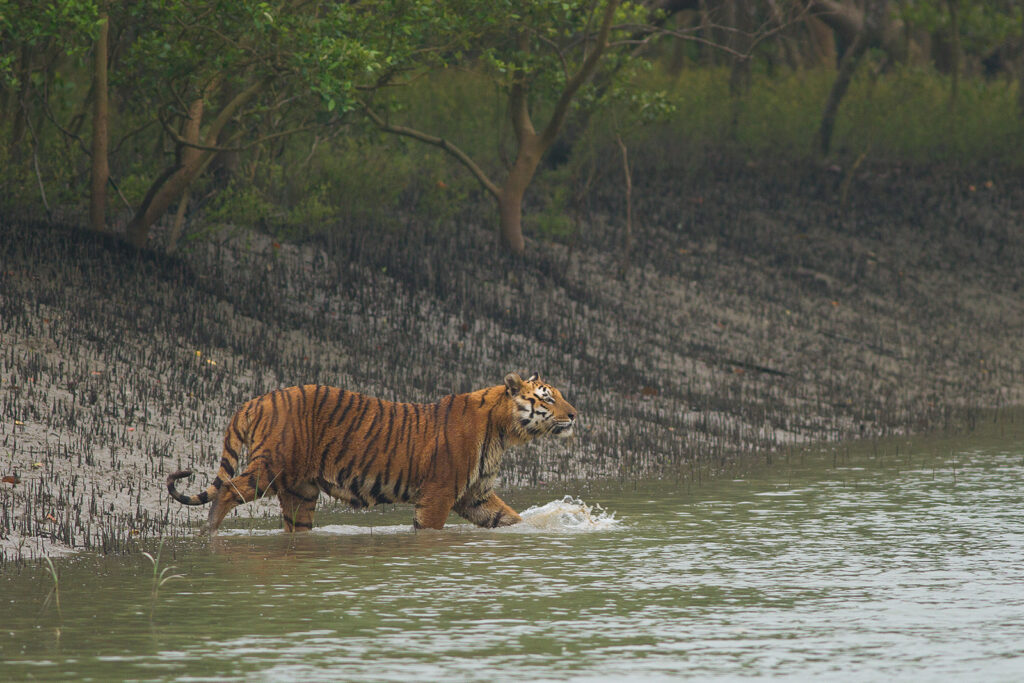
The Sundarbans tour, the world’s largest mangrove forest, is a UNESCO World Heritage Site and a biodiversity hotspot. It spans Bangladesh and India, covering approximately 10,000 sq. km. It is famous for its Royal Bengal Tigers, diverse flora and fauna, and unique ecosystem. Traveling to the Sundarbans is an unforgettable adventure, offering a blend of wildlife exploration, boat safaris, cultural experiences, and eco-tourism.
1. Best sundarban tour Time to Visit
The Sundarbans has a tropical climate with high humidity and heavy monsoons. The best time to visit is:
- Winter (October – March): Pleasant weather, peak wildlife sighting, best for safaris.
- Summer (April – June): Hot and humid, but fewer tourists.
- Monsoon (July – September): Heavy rainfall, risky due to flooding but lush greenery.
2. How to Reach
From India (Sundarbans National Park, West Bengal)
- By Air: Nearest airport is Netaji Subhash Chandra Bose International Airport (Kolkata) (~100 km).
- By Train: Nearest railway station is Canning, well-connected from Kolkata.
- By Road: Travel from Kolkata to Godkhali (Gateway to Sundarbans) via private car or bus.
- By Boat: From Godkhali, hire a boat or join a guided tour.
From Bangladesh (Sundarbans Reserve Forest)
- By Air: Nearest airport is Shah Amanat International Airport (Chattogram) or Jessore Airport.
- By Road: Travel from Khulna or Mongla, which serve as entry points.
- By Boat: Multiple boat trips available from Mongla or Khulna.
3. Entry Permits and Fees
- India: Entry permits required from the West Bengal Forest Department.
- Bangladesh: Obtain permits from Bangladesh Forest Department, Khulna.
- Fees: Vary for foreigners and locals, additional charges for boats and guides.
4. Top Attractions
India (Sundarbans National Park)
- Sajnekhali Watch Tower – Best for spotting tigers, crocodiles, and birds.
- Sudhanyakhali Watch Tower – Great for Royal Bengal Tiger sightings.
- Dobanki Canopy Walk – Elevated walkway for birdwatching and scenic views.
- Netidhopani – Ancient temple ruins and tiger habitat.
- Piyali Island – A peaceful, lesser-known entry point.
- Jharkhali – A developing eco-tourism spot with tiger rescue centers.
5. Things to Do in Sundarbans
- Boat Safari – The best way to explore the dense mangrove forest.
- Wildlife Spotting – Look for tigers, crocodiles, snakes, deer, and exotic birds.
- Birdwatching – Over 300 species, including Kingfishers and Brahminy Kites.
- Village Tours – Experience the local culture of fishing and honey collection.
- Photography – Capture breathtaking landscapes and unique wildlife.
- Mangrove Exploration – Learn about Sundari trees and other vegetation.
- Night Safari (Bangladesh only) – Spot nocturnal animals with special boat rides.
6. Wildlife in Sundarbans
- Royal Bengal Tiger – Largest mangrove tiger population.
- Saltwater Crocodiles – Found in creeks and rivers.
- Spotted Deer (Chital) – Abundant in open areas.
- Ganges River Dolphins & Irrawaddy Dolphins – Seen in water channels.
- Monitor Lizards, Wild Boars, Fishing Cats – Common sightings.
- Snakes – King Cobras, Pythons, and Water Snakes.
7.Sundarban tour& Travel Tips
✅ Pack Light: Comfortable cotton clothes, raincoat (monsoons), and light jackets (winter).
✅ Essentials: Sunscreen, insect repellent, binoculars, camera, extra batteries.
✅ Stay in Groups: Sundarbans is a dense forest; staying with guides and groups is safer.
✅ Avoid Night Travel: Night navigation is risky due to hidden water currents.
✅ Follow Guidelines: Do not disturb wildlife, avoid loud noises, and stay in designated areas.
✅ Check for Cyclone Alerts: Sundarbans is cyclone-prone; check the weather forecast before travel.
8. Where to Stay
In India
- Luxury: Sunderban Tiger Camp, Sundarban Riverside Holiday Resort.
- Mid-Range: Sundarban Jungle Camp, Banani Resort.
- Budget: Eco Stay Sundarbans, Backpacker Hostels.
In Bangladesh
- Luxury: Sundarbans Eco Resort, Parjatan Motel, Tiger Garden International.
- Mid-Range: Forest Department Rest Houses (Booking required).
- Budget: Local guesthouses in Khulna and Mongla.
9. Sundarbans Travel Cost Estimate
| Expense | India (INR) | Bangladesh (BDT) |
| Entry Fee | ₹100-₹1000 | 500-2000 BDT |
| Boat Safari | ₹2000-₹6000/day | 5000-10,000 BDT/day |
| Accommodation | ₹1000-₹5000/night | 1000-8000 BDT/night |
| Guide Fee | ₹500-₹2000/day | 1000-5000 BDT/day |
| Food | ₹500-₹1500/day | 500-2500 BDT/day |
| Total (3 Days) | ₹8000-₹25,000 | 15,000-50,000 BDT |
10. Special Travel Experiences
- Rash Mela Festival (November, Bangladesh) – Annual Hindu festival on Dublar Char Island.
- Honey Collection Season (April-May) – Watch local honey collectors venture into tiger territory.
- Cyclone Aftermath Reforestation Tours – Eco-volunteer activities.
11. Sundarbans Safety & Conservation
- Wildlife Protection: Follow eco-tourism guidelines, avoid plastic waste.
- Climate Change Impact: Rising sea levels threaten Sundarbans; support conservation projects.
- Medical Precautions: Carry basic medicines, avoid drinking untreated water.
Conclusion
The Sundarbans is a once-in-a-lifetime destination, offering thrilling wildlife encounters, rich cultural experiences, and untouched natural beauty. Whether you’re a nature lover, wildlife photographer, or adventure seeker, a trip here will be unforgettable.
Would you like help planning an itinerary or booking a guided tour? 😊
Love how scratch cards blend luck and strategy! If you’re into tech tools that boost creativity and efficiency, check out Best AI Tools for top AI picks across all niches.
Alguém sabe como faz o goinbet login? Tô tentando entrar mas tô meio perdido aqui… Ajuda aí!